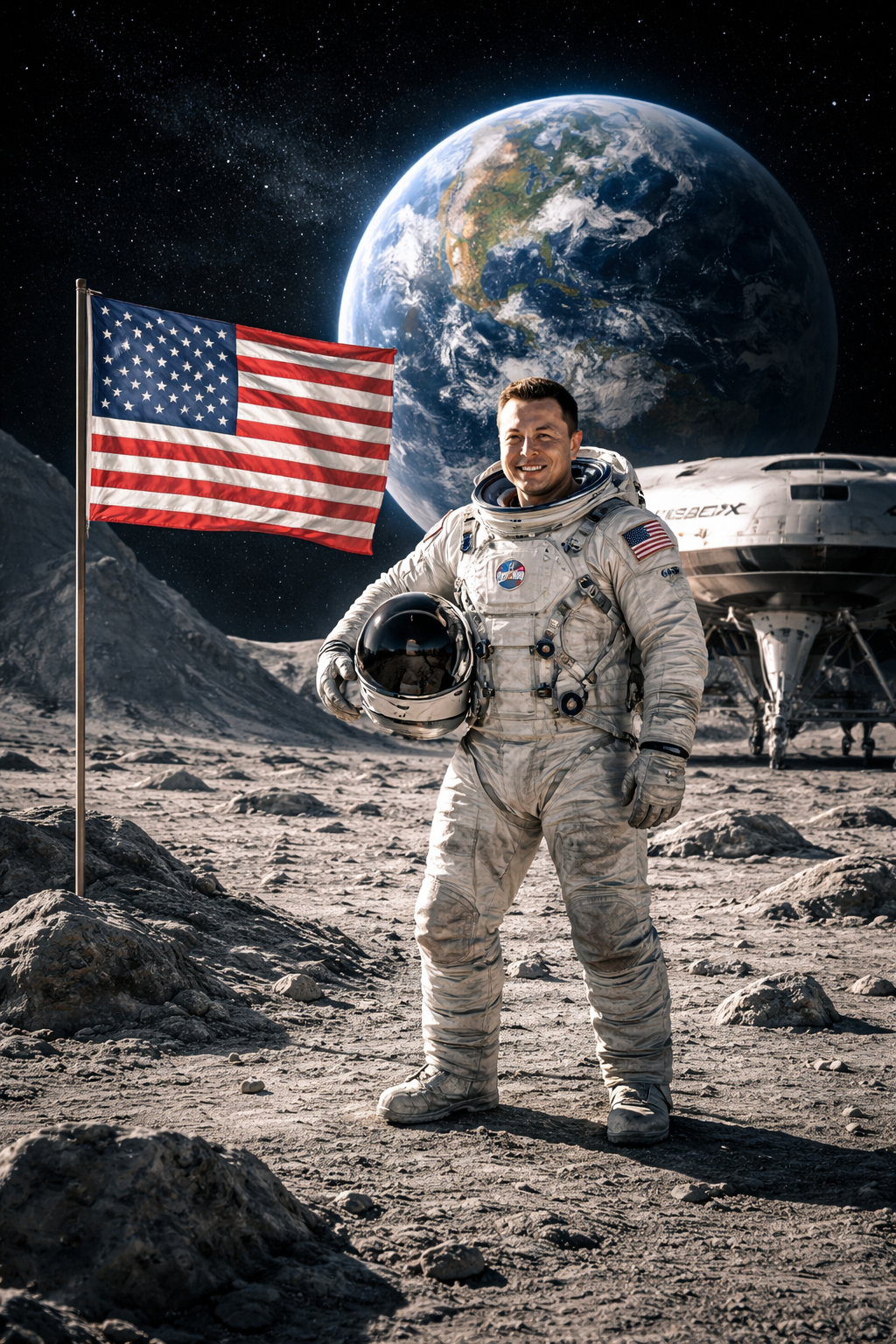
Elon Musk’s journey is one of the most compelling modern examples of how extreme challenges, long-term vision, and relentless self improvement can reshape not only a person’s life, but entire industries. His path has never been linear or comfortable. Instead, it has been defined by uncertainty, failure, criticism, and pressure on a scale few people experience.
Beyond innovation and entrepreneurship, Musk’s story offers deep lessons about mindset, resilience, learning, and personal growth. These lessons are highly relevant to anyone seeking to improve themselves, regardless of profession or ambition level.
Embracing Difficult Goals Instead of Easy Wins
One of the clearest self improvement lessons from Elon Musk is his consistent choice of difficult problems. Rather than pursuing safe or incremental goals, he deliberately focuses on challenges that most people avoid.
This approach reinforces a powerful growth principle: meaningful improvement often comes from choosing paths that stretch abilities rather than protect comfort. Difficult goals force learning, adaptation, and mental expansion.
- Choosing long-term impact over short-term convenience
- Accepting uncertainty as part of progress
- Growing through responsibility and risk
Learning as a Core Survival Skill
Elon Musk is known for his ability to rapidly acquire knowledge across multiple complex fields, from physics and engineering to software and manufacturing. This ability did not come from formal credentials alone, but from intense self-directed learning.
His example highlights that self improvement is inseparable from continuous learning. Knowledge compounds just like habits, and curiosity becomes a competitive advantage.
Instead of relying solely on experts, Musk studies first principles, breaking problems down to their fundamental truths before rebuilding solutions from the ground up.
Using Failure as Feedback, Not Identity
Few public figures have experienced failure as visibly as Elon Musk. Early rocket launches failed. Companies came close to collapse. Financial and personal stress reached extreme levels.
Rather than internalizing failure as a personal flaw, Musk treats it as data. Each mistake becomes information that improves the next attempt.
- Analyze what went wrong objectively
- Remove emotional attachment to failure
- Apply lessons immediately to future actions
This mindset reframes setbacks as temporary events, not permanent labels.
Mental Endurance Under Extreme Pressure
Elon Musk’s journey demonstrates the importance of mental endurance. Operating under public scrutiny, financial risk, and intense workloads requires psychological resilience.
Self improvement in this context means developing the capacity to endure stress without losing clarity. Mental endurance is built by confronting pressure gradually rather than avoiding it.
In everyday life, this lesson translates into strengthening the ability to stay focused and functional during demanding periods.
Discipline Over Motivation
Musk’s work ethic reflects a reliance on discipline rather than fleeting motivation. Long hours, structured schedules, and clear priorities allow him to maintain momentum even when conditions are unfavorable.
This reinforces a critical self improvement principle: motivation is unreliable, but systems and discipline create consistency.
- Designing routines that reduce decision fatigue
- Prioritizing tasks based on impact
- Maintaining effort regardless of emotional state
Thinking Long-Term in a Short-Term World
Another defining trait of Elon Musk’s mindset is long-term thinking. Many of his projects are designed to deliver results years or even decades into the future.
This perspective encourages patience and resilience. Short-term discomfort becomes tolerable when anchored to a meaningful long-term vision.
For personal growth, long-term thinking reduces frustration and increases persistence. Progress becomes a trajectory, not a deadline.
Handling Criticism and Public Doubt
Elon Musk has faced intense criticism throughout his career. Instead of allowing external opinions to dictate his direction, he filters feedback based on relevance and truth.
This approach highlights the importance of selective listening. Not all criticism deserves equal weight, and not all praise should inflate confidence.
Self improvement accelerates when feedback is evaluated rationally rather than emotionally.
Adaptability and Willingness to Change Course
Despite strong convictions, Musk demonstrates flexibility when evidence demands change. Projects are adjusted, strategies evolve, and assumptions are challenged.
This balance between conviction and adaptability is essential for growth. Rigidity limits improvement, while flexibility enables survival.
Adapting does not mean abandoning vision; it means refining the path toward it.
Applying Elon Musk’s Lessons to Personal Growth
The value of Elon Musk’s journey lies not in replicating his lifestyle, but in adopting his underlying principles.
- Choose challenges that force growth
- Commit to continuous learning
- View failure as information, not judgment
- Build discipline instead of relying on motivation
- Think long-term while acting daily
These principles apply equally to careers, health, mindset, and personal development.
Final Thoughts on Challenges and Triumphs
Elon Musk’s journey illustrates that self improvement is rarely comfortable, linear, or predictable. It is shaped by repeated exposure to difficulty, intentional learning, and mental resilience.
Triumph is not the absence of struggle, but the ability to continue growing through it. By embracing challenges instead of avoiding them, improvement becomes inevitable.
The ultimate lesson is clear: progress belongs to those who are willing to endure discomfort, learn relentlessly, and commit to becoming better over time.